Health Policy Profiles: Where Are They Now? Reps. Pettersen and Kiggans
Patrick Meade, Senior Manager, Government Relations
In 2022, CURA Strategies published the second edition of our Health Policy Profiles — a biennial resource dedicated to helping health care stakeholders identify and understand incoming Members of Congress most likely to shape health policy on Capitol Hill.
The 2022 edition spotlighted the “Top 12 to Watch” from the incoming freshman class of the 118th Congress — individuals we believed would emerge as leading voices on health care policy. With the 119th Congress now well underway, we’re checking back in to see how two of those members have built on the promise we identified four years ago.
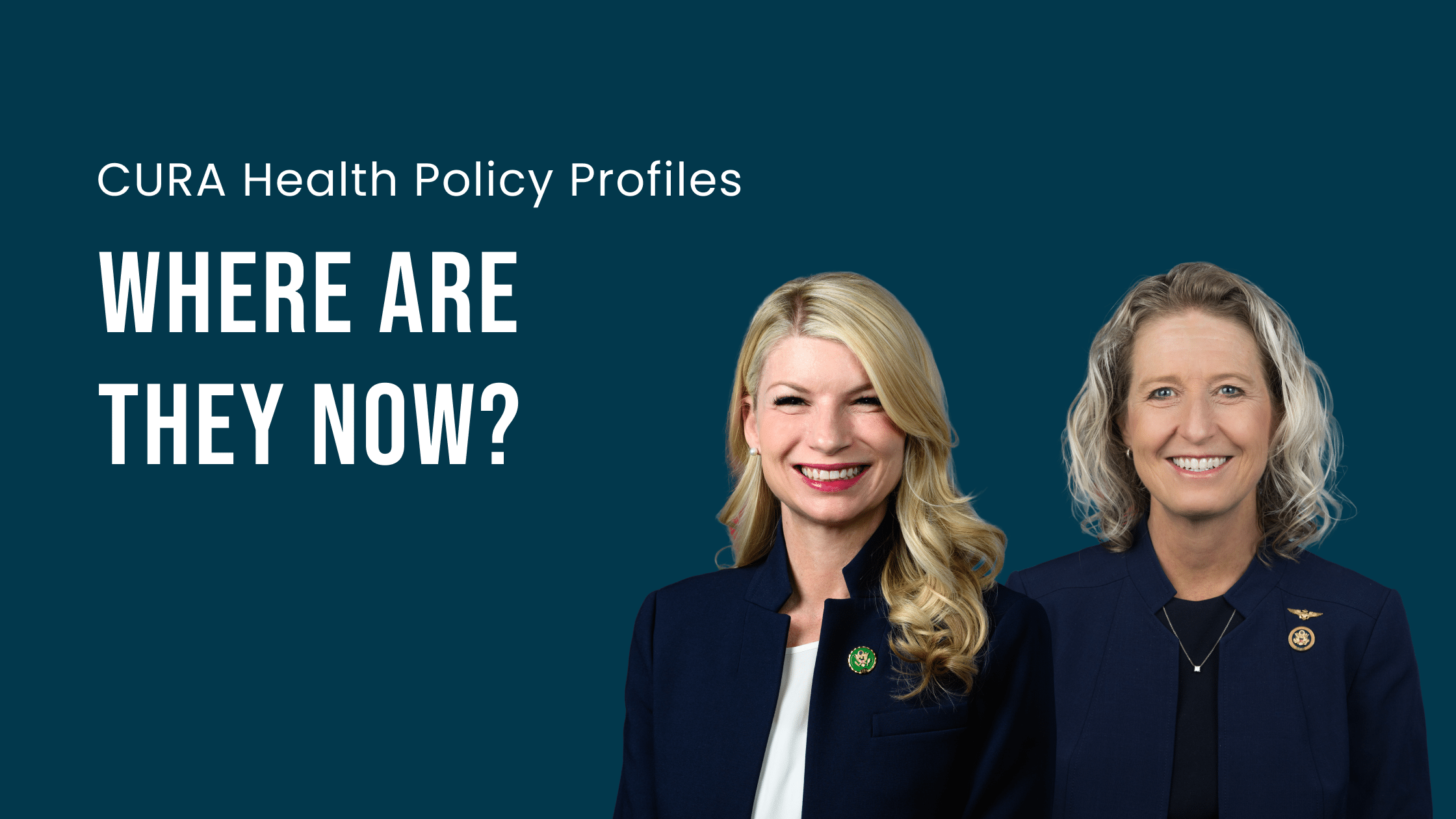
In this installment, we profile Representatives Brittany Pettersen (D-CO) and Jen Kiggans (R-VA) — two legislators whose distinct backgrounds have shaped their health policy records in Washington. Stay tuned for additional profiles from CURA’s 2022 “Top 12 to Watch” in the coming months!
Representative Jen Kiggans (R-VA)
Representative Jen Kiggans isn’t your typical Member of Congress. She’s a former Navy helicopter pilot turned nurse practitioner. That real-world experience led her to the Virginia State Senate (three terms), where she built a reputation around military families and improving care in long-term care facilities.
Kiggans’ professional background has shaped her health policy priorities from the start. Her priorities? Making care more affordable, boosting rural access, addressing challenges in nursing facilities and fighting for veterans’ health. Because she’s actually cared for aging patients and worked inside the system, she brings a practical, grounded perspective on how federal policy affects providers, patients and caregivers alike.
Since arriving in Congress, Kiggans has worked to advance bipartisan solutions aimed at strengthening care delivery and supporting the health workforce. She sponsored the Enhancing Skilled Nursing Facilities Act, legislation designed to let qualified health workers deliver more types of care in skilled nursing facilities, improving access for Medicaid and Medicare patients. As Vice-Chair of the Congressional Nursing Caucus, she was also an original cosponsor of the bipartisan Title VIII Nursing Workforce Reauthorization Act of 2025, the biggest federal funding stream for nursing education, aimed at expanding clinical training and tackling the national nursing shortage.
“Since coming to Congress in 2023, I’ve been proud to lead efforts that expand access to quality care while ensuring our dedicated healthcare workforce has the support and resources they deserve. I was honored to see my bipartisan Care for Military Kids Act signed into law to ensure disabled children of active-duty servicemembers maintain Medicaid eligibility for long-term care services when their families relocate due to deployment or reassignment, as well as my Caregiver Outreach and Program Enhancement (COPE) Act to expand mental health resources for the caregivers of America’s veterans. I’ve also introduced the Enhancing Skilled Nursing Facilities Act to eliminate outdated barriers that prevent nurse practitioners, physician assistants, and clinical nurse specialists from administering care at SNFs. While there is still more work ahead, I’m proud of the meaningful progress we’ve made to streamline care, strengthen our healthcare workforce, expand access for patients and families, and build a more responsive, resilient healthcare system for the future.”
Her committee assignments translate to real action. On the House Armed Services Committee — where she serves on the Military Personnel Subcommittee — and the House Committee on Veterans’ Affairs, where she chairs the Subcommittee on Oversight and Investigations, Kiggans pushes to ensure service members and veterans get the quality care and they’re promised.
On affordability, Kiggans has become one of the most prominent Republican voices in the 119th Congress. She led the bipartisan Premium Tax Credit Extension Act and was the lead GOP co-sponsor of the CommonGround for Affordable Health Care Act — a framework backed by 38 bipartisan House Members that would have extended the Affordable Care Act’s enhanced Premium Tax Credits while pursuing longer-term reforms. Neither passed, and the credits expired at the end of 2025. That said, she also voted for the One Big Beautiful Bill Act, which included significant Medicaid reductions — a vote that raised eyebrows given her stated commitment to protecting coverage access.
Her caucus memberships tell the story of a legislator who pays attention to the full continuum of care. She’s on the Addiction, Treatment, and Recovery Caucus; Assisting Caregivers Today Caucus; Community Health Center Caucus; Mental Health Caucus; Military Mental Health Caucus; Nursing Caucus; Polyfluoroalkyl Substances (PFAS) Caucus; Primary Care Caucus; and Maternity Care Caucus. These affiliations underscore her focus on frontline care, family caregivers and people with specialized needs.
Representative Kiggans has also co-sponsored legislation that would:
- Extend TRICARE dependent coverage to age 26 (the Health Care Fairness for Military Families Act, bringing military families in line with ACA civilian standards)
- Push transparency and accountability in global health programs (the bipartisan SECURE in Health Act)
- Reform pharmacy benefit managers (PBMs) and protect access to pharmacies
- Create grants for Alzheimer’s and dementia education
- Set new rules on prior authorization in Medicare Advantage
- Extend telehealth access and coverage
- Simplify Medicare information for family caregivers
- Ensure access to non-opioid pain management drugs
- Expand Medicare coverage for testing and other services
Bottom line: As a military veteran and practicing nurse practitioner, Representative Kiggans approaches her policy stances from both sides of the stethoscope. She also led her bipartisan Caregiver Outreach and Program Enhancement (COPE) Act through the House as part of the FY24 National Defense Authorization Act — though it didn’t make the final cut. Still, her work consistently leans toward practical, bipartisan solutions that strengthen care delivery for the people who serve: veterans, military families, seniors and rural communities.
Representative Brittany Pettersen (D-CO)
“For decades, I worked through our country’s dysfunctional healthcare system trying to save my mom’s life from her debilitating fight with substance use disorder. What I learned is the problems were much bigger than just our fight,” said Rep. Pettersen. “I have now spent fourteen years in elected office working trying to fix the system — including passing my bipartisan SUPPORT Act, which will expand access to substance use disorder treatment, and introducing my bipartisan HANDS Act, which will prevent opioid deaths. I am so proud that my mom is now celebrating eight years in recovery, and I will keep fighting to save lives so everyone who is struggling gets the same chance my mom did to live in recovery.”
Representative Pettersen’s personal story is the driving force behind everything she does. Before she was elected to the U.S. House of Representatives in 2022, she spent a decade in the Colorado State Legislature (both the House and Senate), helping pass major health care bills and building a record around expanding access, patient protections and public health systems. She brought all of that experience to Congress and then added another layer — in early 2025, weeks after giving birth to her second child, she introduced the bipartisan Proxy Voting for New Parents Resolution with Rep. Anna Paulina Luna. The resolution would have let Members of Congress designate a colleague to vote on their behalf for up to twelve weeks after a child’s birth. It got 218 bipartisan signatures on a discharge petition — enough to temporarily paralyze the House floor — before Speaker Johnson blocked a vote. Pettersen vowed to keep fighting, calling the outcome “not a win” for parents in Congress.
In Washington, Pettersen has become a vocal advocate on substance use disorder, mental health, reproductive health and health care access. Her mom’s battle with opioid use disorder and recovery drive her to find bipartisan solutions that prioritize prevention, treatment and long-term recovery support.
She’s put that into legislative action. She sponsored the bipartisan HANDS Act to expand access to opioid overdose reversal drugs, the SUPPORT Act to revise Department of Health and Human Services programs addressing substance use disorder and recovery, and the Communities of Recovery Reauthorization Act to authorize grants for recovery communities. As the lead Democratic co-sponsor of the bipartisan SUPPORT Act (with Rep. Brett Guthrie, R-KY), she is working to reauthorize one of the most significant behavioral health investments in recent years. Pettersen also cosponsored the Dr. Emmanuel Bilirakis and Honorable Jennifer Wexton National Plan to End Parkinson’s Act, which was signed into law in 2024.
Pettersen’s caucus memberships reflect her broad health policy interests. She’s on the Bipartisan Addiction and Mental Health Task Force, the Fentanyl Prevention Caucus, the Bipartisan Mental Health and Substance Use Caucus, and caucuses focused on diabetes, epilepsy, multiple sclerosis, emergency medical services, and science and national laboratories. She’s also involved in caucuses addressing gun violence prevention, sustainable energy, the environment and caregiving, displaying a portfolio that spans both health care delivery and the broader forces that shape health.
In addition, Pettersen has co-sponsored legislation that:
- Champions maternal health and reproductive rights, including access to IVF and contraception
- Improves access to Medicare, Emergency Medical Services, new medical innovations and telehealth
- Allows essential caregivers access to skilled nursing facilities during restriction periods
- Ensures access to non-opioid pain medications
- Expands and protects mental health services
- Protects free vaccines
- Increases the number of residency positions eligible for graduate medical education payments under Medicaid
- Requires health insurance coverage for services related to congenital anomalies and birth defects
- Covers multi-cancer early detection screening
Bottom Line: Rooted in personal experience and sharpened by years of legislative work, Representative Pettersen’s approach to health policy comes down to access, dignity and prevention. Whether she’s fighting for substance use disorder recovery, protecting reproductive health or expanding mental health, she consistently looks for bipartisan paths forward. Her guiding principle? That people struggling with illness or addiction should be met with care, not barriers.

Patrick Meade
Senior Manager, Government Relations